Sunday, October 30, 2011

Comments for Teachers #3

Tom SchimmerTom Schimmer's post, Nothing Fails Like Success, is great! He discusses why it is important to think about the results of success as well as the methods we implement in order to achieve it. His example is very clever. People who have the flu generally lose weight, so if you wanted to lose weight you could just contract the flu and viola! Obviously, this is not an ideal way to lose a few pounds. As for an educator, we must realize our students' learning abilities and strategies will be different. Some methods will be more successful than others. We also need to reflect upon our successes and failures in order to grow as educators. His message was great and by far my favorite blog this semester!

His other post, The System, is very inspirational and a great wake up call. He talks about how people will blame the "district" or the "system" like they are some kind of foreign entity unlike ourselves. However, we are the system! It is up to us to make a difference regardless of our social or work station. Even if we consider ourselves to be at the bottom of the social ladder or not have the highest ranking job title, we can still have an influence on people we know. It only takes a tiny little spark to ignite a great ravenous fire. In my comment I talked about how people just feel downtrodden and really just depressed. They feel like nothing they can do will change anything. History has proven them wrong and it will continue to do so.

Saturday, October 29, 2011

Blog Assignment 10

teacher vs. educatorAre you a Teacher or an Educator?" is a thought provoking video. I hadn't really thought of the difference between a teacher and an educator. Educator always sounded more sophisticated than teacher, but I knew they were synonymous. In all honesty, I'm struggling to see how they are different. I have been looking in dictionaries to try and find a distinct difference between the two and I cannot. Krissy's blog from the summer 2011 laid it out for me a little better. According to the video an educator inspires and enlightens, whereas a teacher is made out like they just hand out facts and expect students to believe it. I don't agree with this negative connotation of the word "teacher". And if it is going to be viewed negatively then shouldn't we all be saying "I am going to become an educator," versus saying, "I am going to become a teacher"? Maybe I'm taking this way out of context, but I don't see how two words can be synonymous and yet mean something very different. Please! Give me some criticism to help me see what I am missing.
I am an education major because I want to be an educator. Now, just to be clear, I want to inspire my students to learn for themselves and to come forth with new observations and ideas. I want to lead my students by my example. I want to show them that even though something may be hard to accomplish, it doesn't mean you can't have fun while attempting it. I want to guide them through their young stages of their educational journey and give them the tools they will need to continue growing their wealth of information and knowledge. I want to be positive with any and every subject so that my students will take on the same attitude as well. They are the future and I want a part in making it a bright one. This is why I want to be an educator.


a pencil is in a debate with another and comments, Tom Johnson's post, Don't Let Them Take Pencils Home, made me laugh while making me feel like I shouldn't be laughing at all. I was even a tad aggravated after I read it because of Gertrude.
The post starts off with Gertrude, a fellow teacher of Tom's, who exclaims that he cannot let his students take their pencils home for the love of standardized tests. Apparently, studies haven found that children in low income areas that take pencils home score lower on standardized tests. This is absolutely bonkers to me and the point in which I stop laughing with the post. How do pencils have anything to do with scoring lower on tests?! But Gerturde doesn't stop there. She continues to say that kids aren't going to be accountable with their pencils at home and will just play "sick and twisted" games like hangman. At this point I go through comments and reread the post to make sure this isn't another sarcastic poem or something. Unfortunately, it's not. However, I found solace in a comment that was left by Lisa. She basically says that the same "pencil" argument could be made by substituting pencils with books. She is absolutely right.
Another excellent point Lisa makes is the similarities between what Ken Robinson says about killing creativity and Gertrude's attitude. Teachers should allow creativity to blossom within their classrooms. I believe that with creativity comes curiosity and the eagerness to learn. Why would teachers want to destroy that over a bubble test that doesn't truly reflect what a student has truly learned? Seriously, if all we cared about was a test score then wouldn't we teach our children how to take a test, how to fill in these bubbles, and how to watch the clock to see how much time you have left to bubble in how much you know about random facts you are supposed to regurgitate? Teaching is not about the tests, but about the students! And if students want to play games like hangman, write a fictional story, or draw fun little doodles with pencils or pens allow them to express themselves. They may not be learning about algebra or how to read music notes, but at least they are learning about themselves and each other.

Sunday, October 23, 2011

Blog Assignment 9

first year teacher walks the plank.
Mr. McClung's post is a great journey. Once you read it, there is no wonder how he got the most influential edublog of the year award. At the Teacher's Desk is his summation of his first year of teaching. I can only imagine, for now, what it's like to be "thrown to the wolves". Not that the kids tried eating anyone, but I bet it was intimidating to stand and teach in front of them; especially by yourself and for the first time. You also have your own ideas about how things are going to go. You rush in thinking you're going to find the cure to cancer in a week until the first month flies by and your nose is still in the books figuring out what it is. Lesson plans are tough to keep on track, but I think it's even tougher to realize this is going to take longer than you thought. But that is only part of it. If your kids don't understand the material I think it's pretty obvious more time needs to be spent on that lesson. However, I can see how a novice teacher would begin to doubt themselves and their teaching ability. But Mr. McClung gives great advice, "Listen to your students." I believe this realization comes to many teachers, if not all, who are passionate about their kids' educational journey. When you do this the students truly have a sense that the teacher cares. This makes the extra time on lesson plans and everything worth it.

The second post I read was a well of knowledge. This post gave a more inside look at the inner workings and the foundation of the educational system as we know it; teachers and administration. I love his find your school mom tip. I think that is very good advice, especially when you are dealing with young adults who might be going through some really big emotional changes or if you are just going through a rut and need someone to talk to.  I can also imagine that fellow "grown ups" will have the maturity level of a sassy three year old. I believe it's something we all go through, but it's important to know what your real purpose at that school is. To teach and be there for the kids.
I really enjoyed Mr. McClung's post and I am sure he must have felt great writing them. I think this final reflection project will be fun and in a sense therapeutic. I know I have a great deal to consider and talk about in my reflection. Mr. McClung's posts have helped me to see that.

Sunday, October 16, 2011

Blog Assignment 8

Wordle: Sharing multimedia
Dr. Richard Miller is, in my opinion, a revolutionist in the realm of media, education, and technology. His ideas about sharing are exciting and also breaks a boundary that I had never thought of. I had always defined 'library' as a place where books, ideas, and messages were shared. I also knew that going to the library was like playing a game of chance; you didn't know if you're book was there or not. Books are mistakenly put in the wrong aisles and are basically lost forever within a text jungle. I have heard of people go so far as to steal them and burn them to hide ideas and sources for whatever reason. This isn't sharing and it's not efficient.
    However, I think more people are beginning to realize this and they are using the web to gain, search, and share ideas. I am not trying to bash libraries ( I love South's library) but I am questioning its effectiveness, as far as printed text goes, in this modern day. Dr. Miller's videos constantly made me think of wikis. Wikipedia has its faults, but it somewhat defines what he was talking about.
    His video isn't selling the next thing...it's foretelling us of the next best thing. This project cannot be accomplished by just one person. It will be a joint effort, a collaboration of students, teachers, and everyday people to make this dream reality. Will I be able to do this with my students? I certainly hope so. Will they be able to do it? Without a doubt, I know they will. Using the web to create audio and video reports and documents will be exciting. It will be a challenge, but none the less, a great way for the students to take something they already know and put it to educational purposes to teach not only themselves, but me, other teachers, their parents, and people all over the world.

Well Carly Pugh is definitely a leader behind writing with multi-media. Her post was exquisite and insightful. I am really excited about creating my own lesson plans and I have a few ideas already blossoming in my head (maybe that explains the big frizz). I love her idea for the class blog. It is a great way to show and tell others why we want to be an educator, but also a reminder and reaffirmation to ourselves of why this means so much.

EDM 310 for Dummies hand book
I really lol'd the first time I saw EDM 310 for Dummies. I have felt that way only once from this class, but it didn't last long and I realized I needed to step back and approach the issue differently. I would love to be in a video like this and let loose my frustrations of the day. This video made me feel better about EDM 310 because I realized that I am not the first nor the last person to go through this class. It even showed me this class can be fun (even if you do go crazy in the process). The Chipper series is best described by walking around the elephant in the room. The elephant being EDM 310...or rather challenging ourselves to do the work for EDM 310. Anyway, Chipper can't handle the class so she goes through jobs, classes, and ideas that do not work out at all. The message behind these two videos is that EDM 310 is tough, but we've got to challenge ourselves and grow as educators. This class isn't something to get mad about and drop. It's here to help us prepare for our futures and the futures of our students.

Learn to Change, Change to Learn throws away almost the entire structure of school as we know it. One of the big arguments is including technology, i.e. cell phones, computers, and various websites, in the classroom. Obviously tools like twitter and blogs are helping teachers collaborate throughout the world. This would help the students to diversify and to learn about people and countries on a more personal level. I believe it would also give the students something fun to do at home and in class. And there are so many interesting videos on youtube that would bring a subject like science or history to life! I recently read a sixth grade student's blog and re researched the science behind a brain freeze. It was interesting, funny, and was something that he could easily recognize because of personal experience.
Another topic was getting out of the classroom. The classroom isn't seen as a fun, creative place for students. They are exposed to enriched environments out of school like at home or at the museum. I have to disagree with this argument. Elementary classrooms are some of the most exciting and enriching places I have seen. Museums are great too, but I remember feeling rushed and crowded. I know a lot of my peers felt bored because they couldn't find a connection with everything. You can't touch this or that and basically dilly dally along with the rest of the crowd. In classrooms, you can touch and feel.  I think going outside and taking field trips is great, but it's not enough. Teachers should create connections from subject to student and make the experience special. The classroom should be the place for learning and collaboration. It should reflect the kids and should inspire them as well. But most importantly, the kids and teacher should inspire each other. It shouldn't matter too much on the building but the people in it should matter most.

Movie Trailer Project 12

Sunday, October 9, 2011

Progress Report Project #11

I started freaking out about this when I realized our report was due this week. I thought 'I need to have a cite setup with all of this info and I have to have a million things on it' until I realized that I don't need a cite with a lists of things I use to gather information. All of the videos helped me to realize this. Thank you PLN video makers!

I have a symbaloo but I don't use it. Instead I use my ipad as my PLN tool. It has everything I need to stay in contact with vital information pertaining to whatever subject I am dealing with. I always have quick access to twitter, facebook, dropbox, delicious, EDM 310 blog, my blog, skype, safari, WebMD, youtube, and if I don't have something then I can easily get from the app store. I actually just used my ipad to check my twitter feed and discovered an app called Algebra Touch thanks to William Chamberlain. I downloaded the free version in no time from the app store and viola! I now have a new educational and fun app thanks to my  PLN's.

I also use my bookmark bar A LOT. Without it I wouldn't be surfing the web; I would be knocked down by the waves.

Blog Assignment 7

Randy Pausch and his family
Randy Pausch and his family .
   This time watching Randy Pausch's Last Lecture: Achieving Your Childhood Dreams made me laugh and cry and reflect on why I want to become a teacher. I have reflected on why I want to become a teacher (and why I use to not want to) in the past. I use to not want to be a teacher because I thought that I didn't have what it takes to make kids want to learn. I would think about my teachers in the past and realize all of the insanity they went through with kids and parents, creating lesson plans, grading mountains of scribble scrabble, and having to go to school for the rest of their career! All of this detracted me from teaching until I realized teaching was more than that. It's inspiration, motivation, caring for, leading and guiding our future. Being a teacher is more than a lot of work. It's not like any other job where you don't have to connect with the people you work with, do a bunch of desk work and then play on the computer for four hours, or decide to call in sick a couple of mornings just because it's not a good day for you. I would even go so far as to say teaching is not a job; it is a lifestyle.
Randy talked about many traits that I believe teachers should possess. One that really sticks to me is having faith in kids. So many schools, teachers, and even parents do not have faith in their kids. They don't give them freedom. They give them schedules, routines, and busy work which doesn't breed creativity; they suffocate it. Randy's parents allowed him to paint his room when he was younger. Any parent that I know would have thought they were crazy. However, Randy's room looked really fun and neat! In the video Randy looked really satisfied with his room and I could tell he must have been really proud of it especially as a kid. As a professor, he gave his students freedom to create their own world (with only two restrictions). His students blew him away every time a project was due. Freedom enables people to become, create, and believe in something beautiful. It unleashes their full potential and takes everyone, including themselves, by surprise. Kids need freedom in the classroom. I don't mean leave them unsupervised. Just let them branch out and discover their creative side. In return you always be surprised.
Speaking of potential, Randy received some really profound and wise advice. After he was blown away by the results of the first assignment Randy was at a lost of what to do next. His mentor, Andy Van Dam told him at the beginning of the next class to say to his students, "I know you can do better." Randy realized that he really didn't know his students' potential and neither did they. So instead of placing a "bar" for what he was expecting, he just let his students keep on advancing in their skills. What this means to me is don't ever expect less of your students. Even if they blow you away every time keep telling them to do better. Even if an athlete is the best at their sport do they stop training and practicing what they do? No, because they know and their coaches know they can do better. Teachers and their students should have this same mentality. Teachers are coaches and students are academic athletes.
The last thing I'm going to point out from Randy's lecture is probably one of the most important pieces of advice for me to remember when I am teaching. Brick walls are there for a reason which I feel ties beautiful to his quote "Experience is what you get when you didn't get what you wanted." If we always had our way growing up, what would we have really gained? I know that I wouldn't be where I am today had there not have been a brick wall or two in my way. I wouldn't have the skills, the knowledge, or the appreciation for those who helped me overcome those hurdles. I would definitely not be a strong, persistent, and self confident person without those experiences from running into those brick walls in my life. My students are going to have the brick walls when learning. Some may not read as well or understand math as quickly as other students. But, those walls can be useful to have them and I experience trying new methods, having them assist their fellow classmates, receiving and giving positive criticism, and establishing a friendly environment where it is perfectly ok to ask questions. There will be brick walls in everyone's future, but they aren't going to keep me and my classes from achieving our goals in learning.
Randy Pausch
Thank you Randy Pausch. 

A history of our history Project 9b

Sunday, October 2, 2011

Blog Assignment 6

Youtube, google scholar, flickr, wikipedia, amazon, skype and other tools used for personal networking
Connectivism is extremely interesting. I never thought about learning through social networks until I enrolled in 310. Slowly, I am learning that valuable information gets "tweeted" nearly every minute. I am realizing that tweeting and blogging is helping me to increase my teaching skills and knowledge. One day I will use it to prepare my students to dive into learning. However, this connectivism gives me a new perspective on technology and students.
I know that when I become a teacher, it will be necessary to introduce my students to computers, the internet, different interesting sites, and hopefully fun and educational apps! The thought that my job as a teacher might become obsolete didn't really phase me until viewing this video. My thoughts were "I'm going to be an elementary teacher. They will always need people like me to perform those jobs." However, if students are self motivated enough to learn on their own and create things mentioned in the video the possibility of my thought just being wishful thinking is very high.
Although these fears are realistic to some teachers, and with good reason, I know that technologically literate teachers will be in high demand. I plan on being one of those most wanted teachers. Even as an elementary school teacher, it is vital for me to prepare my students to know how to learn on their own.

Wendy DrexlerWendy Drexler seems super passionate about connectivism. I could not find any recent blogs about it on her site so I do not know how it went. On the flip side of that comment, I know that several, maybe thousands, of people have heard of this fascinating and futuristic idea of learning and teaching. I also love the fact that she knits!

PLEs was such a cool video. I loved the different programs she used. I have already added the link to this video to delicious and will be scouting out programs like the student used for her PLE. The PLN thing was really starting to scare me, but now I feel encouraged . It also helps A LOT seeing it being easily used by a very smart seventh grader. I am very glad to have watched this video!

Wednesday, September 28, 2011

Comments for Kids Summary (September)

A boy has thrown a ball threw his window and says to his angry father
Kids are proving to me that they like blogging.
All of my kid's blogs were really interesting. Kristina's Crazy blog was cool and pink. She had a lot of pictures to go with all of her blogs and did a great job writing about what her class was doing. Tamati's blog Where in the World is... helped me visualize where Sri Lanka and India are. Tamati highlighted the sports of these countries whicj included, hockey, football, and cricket. Elise, Cade, and Danielle did a great job making an interview video. Elise asked good questions, Cade did well answering her questions, and Danielle did fabulous capturing it all on camera. Devin is reading some fun and interesting books for school. Another person recommended Freckle Juice by Judie Blume and I seconded it to Devin. I think he will enjoy it.
All of the students have taken to their blogs very well and are beginning to make them reflect their own style and personality. I believe blogging is helping kids become comfortable with technology while teaching them valuable lessons about safety and manners as well as introducing them to people who live all over the world.

Sunday, September 25, 2011

Four Generations Timeline

Comments for Teachers #2

I Teach in a Failing School and You Should Too by Tyler Rice was an enlightening post. Rice described his failing school and his students which needed a learning experience that was more than burping back facts. 90% of his students are ethnic minorities, come from undesirable homes, and definitely do not want to be in school. So Rice had to come up with a variety of ways to teach his students; rather, he had to inspire them to want to learn. He did so by giving them more freedom in the classroom and allowing them to explore what interested them. Rice has also had to explore in what interested him, teaching. Because of his predicament as a teacher in a failing school, Rice has become a lifelong learner and has really grown as an educator.
In my comment I wrote about my high school and my teachers. My teachers had walked out of a terrible situation and did not have many resources. But they pulled through and gave me an education that is priceless and unique. I truly believe sometimes it takes an extraordinary situation to bring out the best.

My Element Project is a very interesting approach to learn about the elements. Basically, his students will select an element and discuss how they are similar and different by describing the family, history, structure and  common uses. I commented on how it seems like a great way for students to identify with the subject material.  I believe it will help in interesting them and increase the appreciation for the subject. In another comment I saw a neat activity for students to do in groups or for individual study. Have them complete a periodic puzzle!
periodic table of the internet.
love it 
There was also a link for The Element Song. Very amusing and educational. Click it and see if you can sing along!!!

Thursday, September 22, 2011

Blog Assignment 5

Wordle: InterPoemWhat are we without poetry? In some cases we are better off. However, Dr. McLeod's Blog is valuable due to the way it expresses many peoples' fear about technology, particularly the internet. His sarcasm throughout the poem is also important because it shows others' ignorance towards advancing our youth. I also appreciate how the poem was to teachers, parents, etc. This poem came across to me as a warning to these people. His ending, which was not sarcastic at all, claims he will have his kids on the internet and learning how to utilize it to their advantage.
Out of many of the comments, I agree with Katherine Perkins. She says, "the teacher or parent should talk with that child about the positives and negatives of the internet." Parents and teachers should be discussing these things with their children. This kind of discussion reminds me of sex ed. You were told what it was, the consequences of doing it, and why it's important to wait or use preventative measures. (Sadly, for many students this talk came to late or was the first time they had talked about it with an adult.) It also makes me think that just because we ignore technology doesn't mean it's not there or not happening. It's important to talk about it and LEARN from it. One way to do this is to learn from others in person or via socail networkings like facebook, twitter, and blogs! Technology may have a dark side, but the bright side far outweighs the dark. 
WHOA! Dr. McLeod is one of the co-creators of Did you know? 3.0. He is also a leading force behind technology in the classroom movements and was credited as one of the people who inspired Teaching in the 21st Century. His poem is probably a summation of experiences with people whose fears about technology prevent them from using it in a positive and helpful way.

google imagesWOW! That is the third time something has shocked me. I love this idea and that a high school student brought it to light. I think the ischool initiative by Travis Allen is great and has me thinking about investing in an ipad. The apps are great tools to use in the classrooms of kindergarten through college. I know many students who already use their ipads or pcs in class. They take notes and follow the lecture on these devices. I actually use my pc during organization meetings and for one of my classes. I believe ischool would be beneficial to schools and students for monetary, spacial, and technological reasons.
The other video by Travis Allen is inspirational. He is making a difference in the world today because of an idea he had back in high school. I really love how he held onto his idea. Now he has his own team, travels around the country, and is improving thousands of childrens' education, as well as improving the relationships between teachers and parents I'm sure. I am excited about ischool and I expect to work with it in the near future.

Guess what I'm listening to! A breath taking piece of art created in part by people with angelic voices and by technology. Lux Aurumque by Eric Whitacre is a beautiful example of the bright side of technology. The choir and director were not in the same location. However, due to technology, they were able to marry their voices to create a harmonious melody.
I wonder how much more difficult or easy it was in making this callaborative video versus traveling to a location and practicing and then having to record it. I know many hours of practicing is involved either way, but I imagine that not having to travel back and forth to a specific location only added to the choir's independent free time. I also think that the same amount of time was put into the technical work i.e. cleaning the voice recordings, combining different camera angles, and perfecting the video. However, I imagine that these things were easier to maintain because it could be done on just one computer.
This would be an interesting project to do with a classroom. Have everyone record themselves independently and then work together to combine the recordings into a sort of video collage. I will have to keep this in mind for the future!


Teaching in the 21st Century by Kevin Roberts is eyeopening, as well as eye catching. The video asks many questions but I think the most important question is what does it mean to teach in the 21st century. What does it mean? I believe Roberts is telling us that teaching today doesn't mean teaching burp back facts. You can find those in books, on your smart phone, or your computer. I think he is telling us that teaching today means to teach children how to filter information and how to utilize the tools they use to gain information to their advantage in all aspects of life. Basically, teachers should not be teaching the same way they did 50 years ago.  However, teachers are still teaching the same way they used to teach hundreds of years ago. Even some of the material that is taught in schools, in my opinion, is irrelevant.
wordle.net by Mary BishopI realize as a future educator that my methods of teaching are not and should not be limited. Technology is being embraced by children half my age and younger now (I am only 19). They are using it to gain various tid bits of information, but is that information relevant? They are using it to create so many different things, but are they using the most efficient programs to do this? They are using technology, but do they really know how to use it for their best interest? This is my job to help them answer these questions. I am not saying to dissolve the old subjects like math, science, etc. I am saying that the way we teach these subjects should change.

Friday, September 16, 2011

Blog Assignment 4

A man who appears to be pushing a shark out of the way saying,
I love this!
Eagle's Nest Radio is sharktastic! I loved the music paired with each part of the broadcasts. I especially like the voice manipulation they use for the Vocabulary Vault. That is something I want to do in some video I make. The kids seemed really enthusiastic about interviewing each other and sound like real reporters. The shark facts were very informative, the explorers were quite convincing, and the road to Rome was a blast from the past! Rockin' Riddles was a great questionnaire and the beat was fun. The kids also did a good job focusing on both sides of history such as the negative view of Native Americans towards Columbus Day verses the view of most people. The fierce gladiator piece in the last recording taught me many things that I didn't know. I never realized gladiators went to a special school, nor did I realize people ate lunch after watching men and animals be slaughtered.I also learned that Cleopatra was not Egyptian but Greek! Who knew...I do now.
Eagle's Nest has filled me with inspiration when it comes to audio podcasts. I am actually looking forward to trying out my skills. At first, I was nervous about incorporating music. However, with thanks due to the Eagle's Nest I feel confident about using music and the podcast. THANK YOU EAGLE"S NEST!

The Magic of Learning.
I love the creative technique in Langwitches that makes kids enthusiastic about reading. I can hear the excitement in their voices as they read their scripts. The pictures revealed that the printed script helped children follow along with the story as well. The kids must have loved making the accompanying noises. I can imagine them giggling along with the recording as they read the printed script in class. Another component of this project that I thought was genius was how they used smartboards and the recordings; basically TECHNOLOGY.
I am absolutely sure that the kids gained multiple skills throughout this project and loved every second of the learning process. This project assisted with reading, communication, pronunciation, listening, comprehension, time lines, smart boards, and different programs that enhanced their learning experience. I always knew from babysitting that kids, even toddlers, love to record and watch themselves doing everything. They are proud of what they do and they want others to see them and be just as proud. I am extremely happy that someone figured that out and used it in the classroom. I will definitely remember this method to help kids read, write, and communicate when I become a teacher. I am very excited about this!!!!

I found Judy Scharf's Podcast Collection helpful and interesting. Her collection is on my bookmarks' bar. I know it will come in handy. The video that she posted, About Audacity, has me messing around with Audacity. I also loved her layout of the schedule and different guidelines to follow when trying this out with students. One point that really stuck out to me was number 7, "Invite the principal, department chairperson, or some other person to come in and see the presentations.  Students will be very proud of their work." This is similar to what I said about the Langwitches project. Children want someone to be proud of them. I guess I should say everyone wants someone to be proud of them. This inspires kids, and adults, to continue learning and trying new things out. I believe when I get into a classroom of my own and try out the Langwitches project with my pupils, they will truly learn something and gain the confidence to learn outside of the classroom. I imagine the parents and students will be extremely proud and happy. I know I will be! 

Sunday, September 11, 2011

My Google Presentation

Blog Assignment 3

The remains of Enterprise High School after the devastating storm on March 1, 2007
Remains of Enterprise High School after March 1, 2007.
     It's Not about the Technology by Kelly Hines made me think of my high school, EHS. On March 1, 2007, parts of my hometown were completely destroyed by an EF4 tornado. My high school was also destroyed and eight students lost their lives. However, in just a few weeks school resumed for the high school students in various locations of our mangled town. For three years following that horrific day, the high school students went to the junior college, an elementary school, the service station, trailers, and to the practice fields of our non existent high school building. We didn't have the resources to have smart boards, new computers, nice and new projectors, and many other up to date technologies. But we did have pencils, paper, and amazing teachers that pulled through a terrifying and scaring experience to give the BEST education anyone could ever want or ask for.
      Mrs. Hines' blog is absolutely true; I know because I have lived it. Would my high school experience had been better if all the latest technologies of that time had been available? I believe my education would have benefited if that had been the case. However, I would not trade a classroom full of technology for my amazing high school experience. My teachers taught me more than math or french. They taught me to learn for myself, to strive for the best, and to never forget where I come from. Can you teach that on a smartboard?
       If teachers and schools have the resources to provide technology then do it. However, make sure the quality of teaching does not decline as the value of technology increases. Practice what you teach, teachers! If you want your students to learn, do a little learning for yourselves!


      Mr. Fisch's blog post, Is It Ok to Be a Technologically Illiterate Teacher? was fascinating to me because of the literacy comparison. This is part of my comment to him, "I found your comment comparing illiteracy fascinating. In the past I considered myself to not be the best at computers. However, I was usually willing to work through whatever technological issue I was having and most of the time I was successful. This process was the same for me when I was learning to read and write. The more I tried and practiced the better I became at it. I cannot imagine anyone without the ability to read today even though there are many people who can't. Twenty years from now I am going to have the same thought with one adjustment. I cannot imagine anyone without the ability to use a computer today even though there are many people who can't."
      One other major topic that stayed with me was how parents and teachers excuse themselves from being technologically literate. Teachers do have a lot on their plates; families, students, parents, policies, grades, lesson plans, and the list goes on. However, teachers have a duty to their students who will one day run this country and influence the world. Teachers also owe it to themselves to be up to date. Technology can help in lesson plans, organization, and communicating with anyone associated with the classroom. If it is beneficial to the students and the teacher then why not utilize it in the classroom? If you want you're students to work smarter, not harder then do likewise. Like I said before, Practice what you teach, teachers!

       Wow. Once again, I am shocked and it's all because of technology. How many times will it continue to amaze me? According to this chart by Gary Hayes, the numbers just keep on going. It's almost unbelievable how many people are using social media technology hundreds of times a day. I've always heard and seen sitcoms about people who can't live without their smart phone or computer. Now I know the movies are not just exaggerated portrayals of people. These people are real and are out there somewhere blogging, tweeting, sharing, watching, recording, typing, and face-booking. They might even be doing all of those things at once!
     I realize many of these people have to constantly be checking and updating everything for their jobs; but, do they ever have time for anything else? What about cooking or fishing? Those are two of my favorite things to do. However, many of those numbers are coming from people who are younger than I am. In a couple of years, some of these youngsters will be my students. It seems to me that both student and teacher will have many things to show, teach, and learn from each other.


A toddler using a laptop
       A Vision of Students Today by Michael Wesch shows my generation's attitude toward school, yet it was made nearly four years ago. Four years ago, I was a sophomore in high school. I didn't have facebook, twitter, or email. Today I have three different email accounts, facebook, twitter, skype, windows live, three internet browsers, a smart phone, and a laptop. A lot has happened in four years... But what has changed in the class room since the 1960's? Really, nothing comes to my mind. I wrote book reports in high school that my mother had to write in elementary school. History, math, most sciences, and English have not changed a bit and neither has the teaching style. However, people and technology are changing.
        As a future teacher, the video proves to me that my students will need to be prepared to face their technological tomorrows. I need to teach in a fresh and creative way to show my students that the other subjects are just as important too. I know that technology, as well as my own creativity can help me give the best instruction to my pupils.

Thursday, September 8, 2011

Comments for Teachers #1

Difficult Conversations Book Cover

   The first post I commented on of Mrs. Palmer's was Knowing is easier than implementing. Her post was about a business book, rather the first 25 pages of a book, called Difficult Conversations: How to Discuss What Matter by Douglas Stone. Mrs. Palmer summarizes why some conversations are more difficult than others, why we avoid them, and what we think about when having a conversation. Basically there are three topics that come to mind when having a conversation; what happened, feelings, and identity. The what happened idea involves truth, blame, intentions, and conflicts. You or the other person want to be right and disregard the other person's side of the argument. The feelings conversation occurs when you let your feelings get in the way of thinking and acting rationally, or you are afraid of hurting the other person's feelings. Lastly, the identity idea happens when people worry about their image. Mrs. Palmer then discusses how by reading this book teachers, principals, and students can benefit from this positive way to communicate.
    In my comment, I told my personal experience of having difficult conversations. I talked about my team and   how the three topics were always part of our conversations. After a conflict many members let their feelings, as well as the feelings of others, get in the way of progressing. As the captain, every time I had a conversation I was aware that my image was at stake. I really enjoyed Mrs. Palmer's post about difficult conversations because I completely understand what it is like to have one.


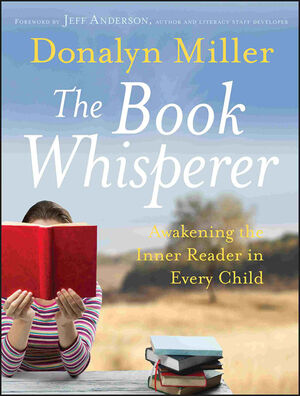
The Book Whisperer book cover
Definitely on my "must read" list!
  As an elementary student I must have been an extremely optimistic nerd because I really loved reading. Book reports was an extension of the enjoyment of reading. Required readings were new adventures for me. Generally, I enjoyed every part of reading...except writing according to MLA. This is similar to what Mrs. Palmer's blog, Mrs. Palmer has changed my life, is about. In her blog she discusses using the method in The Book Whisperer to help her students get better at reading. The book's method is simple. Do not have assigned/required books and do not assign book reports. The book says that "skilling and drilling" our students is killing their love of reading. Implementing required texts, reports, tests, and programs that are supposed to help children read actually negatively affect children's view on reading. So, Mrs. Palmer did away with reports, but required the students to read 18 books. The students had freedom to choose what books they read according to genres set by Mrs. Palmer. They also had a reading period during class. Mrs. Palmer's students loved the experience and many still read and love it. The parents were also very appreciative and pleasantly surprised by their children's new love of reading.
          In my comment I brought up my siblings' experience with DEBILS. It is a program designed to help students read by targeting seven different ares in one minute. For more information visit DEBILS. The program did not help my siblings at all. In fact, it actually negatively affected their reading. They could speed read but they could not remember nor comprehend the material they read. My parents had to work with my siblings to try and reverse the effect of DEBILS. Hopefully, as a teacher I will remember Mrs. Palmer's blog and use the method in The Book Whisperer to create a love of reading in my students.